Strona główna » Partnerships for Schools and Institutions
Partnerships for Schools and Institutions
We know how to communicate knowledge in an engaging way
Our offer is flexible and tailored to the circumstances and location, the age of participants, and their previous experience with this type of activity. Sessions can be conducted in a traditional (in-person) format or remotely, as webinars.
What can we do together?
No idea – even the most noble one – will become popular if it is not talked about. The same applies to ecology, nature conservation, and efforts to support pollinating insects. WE know how important they are. However, we want everyone to understand this as well.
Especially the youngest, who can influence the behavior of their parents, siblings, and loved ones – and who will soon be making decisions about the future shape of this world

Educational workshops
We organize activities on topics including wild pollinating insects, honeybees and beekeeping, ecosystem support, and the importance of biodiversity.
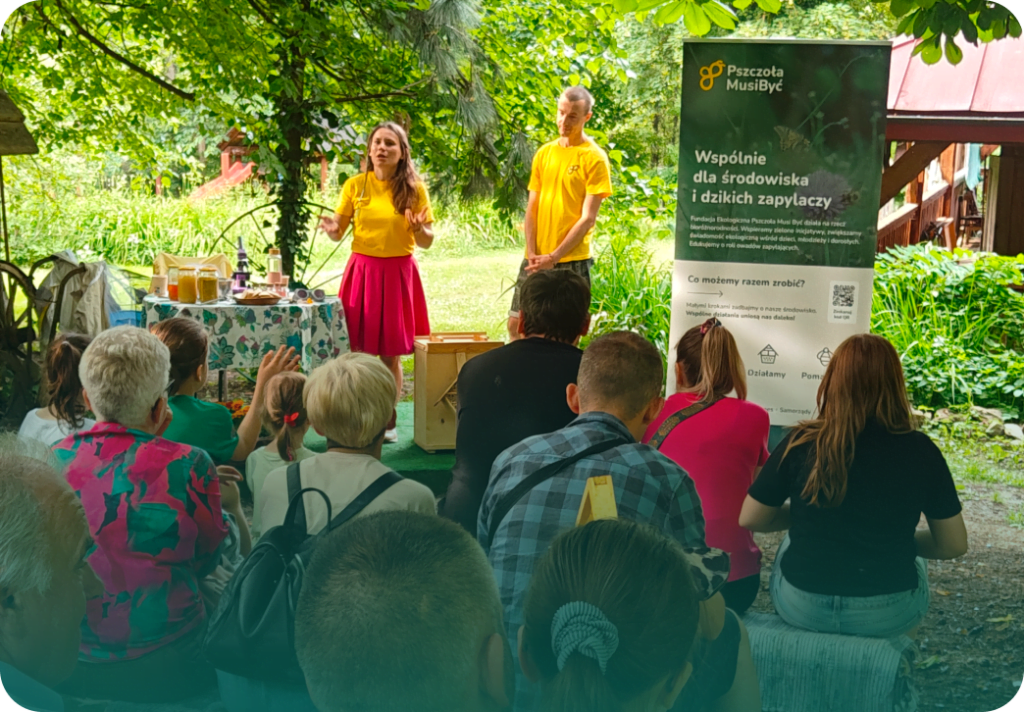
Lectures, workshops, demonstrations, and training sessions are designed for people of all age groups – we are just as happy to visit a kindergarten as a university of the third age.

Picnics and outdoor events
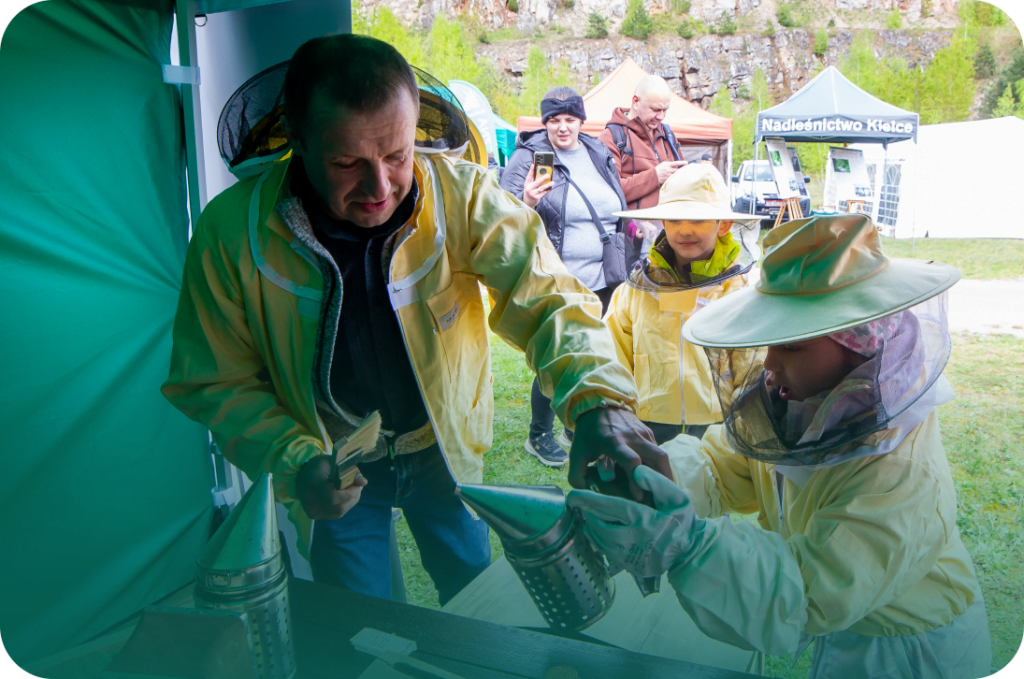
We also run sessions during artistic, sports, trade, and family events. We reach a wide and diverse audience, effectively capturing their attention and sharing knowledge.
Our educators deliver presentations and workshops on biodiversity, sustainable development, and the role of wild pollinating insects. We teach how each of us can contribute to environmental protection.

Tailor-made projects
We are open to individually tailored educational projects focused on environmental awareness and action. Within these, we take into account the specific context and needs of the Partner and the target group – pupils, students, and employees. Participants can get involved in creating flower beds and wildflower meadows, school gardens, environmental campaigns, or scientific research.
We provide both substantive and logistical support, and our educators and experts have strong theoretical knowledge and many years of experience. We carry out projects in line with CSR guidelines and standards.
Our educators deliver presentations and workshops on biodiversity, sustainable development, and the role of wild pollinating insects. We teach how each of us can contribute to environmental protection.
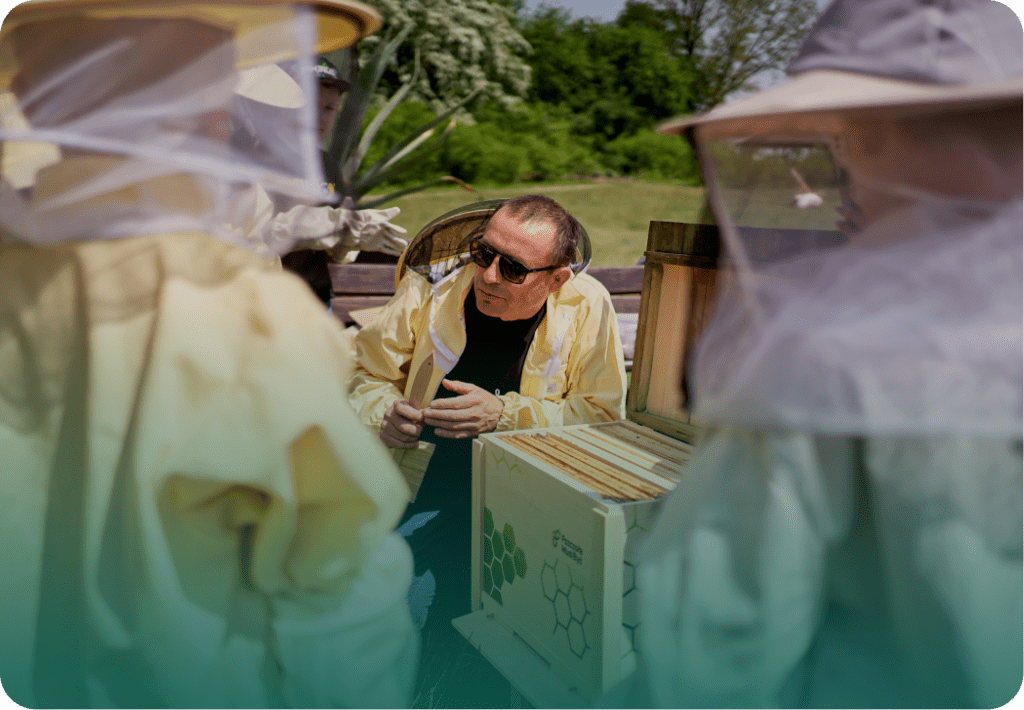

Some topic examples covered
in the workshops
By using and combining them, it is possible to create virtually any thematic program – for example, one that explores past and present beekeeping, demonstrates how bees collect resources and what is later produced from them, or presents the inner workings of a hive, as well as ways to support insects.
- Why are pollinators so important?
- Do only bees pollinate plants?
- Let’s not be afraid of bees, wasps, and spiders.
- Wild bees and honeybees.
- Solitary bees - you won’t believe how many there are.
- Insect hotels and shelters.
- The world of nectar-rich plants.
- How can we help bees and insects?
- An insect-friendly garden.
- Let’s take care of our world. Ecology for the youngest.
- What does a beekeeper’s work look like?
- Beekeeping traditions.
- How is a hive built?
- The life of a bee colony.
- The life cycle of the honeybee. (For older children)
- What do bees give us?
- How is honey made?
- What can we use honey for?
- Honey - the oldest medicine.
- How and why do different types of honey vary?
Hands-on activities are also available – such as making beeswax candles, building insect houses, or creating bee-themed arts and crafts. Participants can also taste different kinds of honey and other bee products – bee bread, pollen, and propolis.
Of course, we are always ready for children’s curiosity and questions to take the session in a different direction than originally planned.


Educational webinars
We run online sessions for schools, companies, and institutions interested in environmental topics. It’s a convenient way to share knowledge that works well both in education and CSR activities.
Our webinars cover topics such as bee ecology, their role in the environment, and the threats linked to human activity. We prepare the content in cooperation with academic experts, making sure it reflects current knowledge.
Would you like to work with us?
Go to the contact form and select the collaboration option that suits you best – or explore our previous projects.


Discover the world of nature together with us
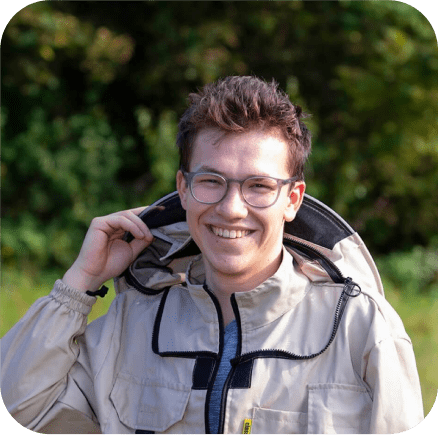
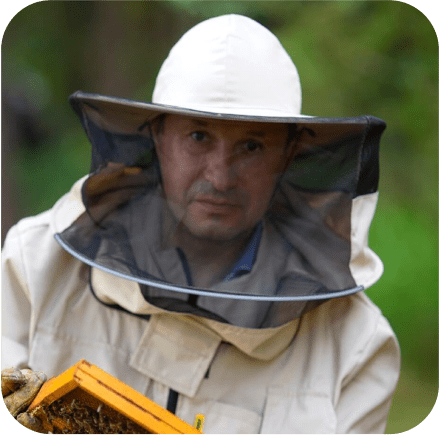
The founders and volunteers of the Foundation have extensive knowledge of the natural world and the impact human activity has on it. For some of us, this is very practical knowledge, passed down literally from generation to generation. Beekeeping is our hobby, and respect for nature is our way of life.
Jakub
Sobeczek
Artur
Sobeczek
Marta
Nowak
Meet the whole team
Previous campaigns
Frequently Asked Questions
What age group are the sessions intended for?
For all age groups – we have conducted them both in nurseries and at universities of the third age. Of course, the program and format of the sessions are adapted depending on who we are meeting.
What topics are covered during the sessions?
The topics are very broad, but always related to ecology in the broad sense, responsibility, and awareness. We do not always talk only about pollinators, although at the same time – we always make sure to include them.
How long do individual sessions last?
It depends on their nature and the audience. They can last half an hour (for very young children), a standard school lesson (45 minutes), or a full day, which can happen during outdoor educational events.
Do the sessions take place at our facility or at your location?
Almost always, the sessions are conducted at the your’s facility or at an outdoor location they choose. Educational sessions at an apiary are also possible, but naturally limited to those living nearby.
What are the costs of organizing the sessions?
If we operate within a grant or have support from a business sponsor (e.g. a local employer), the sessions are free of charge. Otherwise, the details are agreed individually.
Do you have programs adapted to different levels of knowledge?
Absolutely. When creating a program, we take into account the participants’ ability to perceive and understand the topic, as well as the vocabulary used. The topics themselves can also be discussed at different levels of detail and complexity, including by practitioners with many years of experience.
Do you offer hands-on workshop sessions?
Yes, and they are very popular, both at small-scale meetings and outdoor events. They mainly involve planting, plant care, or building insect houses.
Do you conduct online sessions?
Yes, although whenever possible we strongly encourage in-person meetings. They offer more educational value, make discussion and exchange of ideas easier, and allow participants to interact with our teaching aids – some of which cannot be used online.
Do you have references or reviews from other institutions that have used your sessions?
Of course, we have both formal references with recommendations, signatures, and stamps, as well as reviews and thank-you notes on social media.
What is your availability?
Please contact us regarding scheduling. We have several educators located in different parts of the country, most of whom are also professionally active. We will certainly try to find a suitable date.
Is it possible to adapt the program to the specific needs of our institution?
Absolutely. Based on our experience, the individual needs and characteristics of an institution or company allow us to create a program that engages participants, encourages discussion, and helps develop better patterns of behavior.
Do you provide the equipment and materials needed to conduct the sessions?
Yes, of course. This applies to both indoor and outdoor sessions. We have a large tent, sound equipment, teaching aids, and educational materials. We can also prepare personalized leaflets and posters.
Do you have any
questions?
Call and find out everything you need.