Let’s Work Together for the Pollinators and the Environment
Pollinators are the key to biodiversity and ecological balance. Without them, our ecosystems may struggle to function properly, and many plant and animal species would face serious challenges.
We educate, engage, and seek Partners who want to take real action for the common good.
We want to be your guide to the world of nature – especially wild pollinators. Although the bee takes center stage in our Foundation’s name, our work extends far beyond a single species. We focus on various groups of insects, as well as on the broader natural environment as a whole.
Our mission is to promote environmentally responsible attitudes, raise awareness, and encourage people to take action. We believe in the power of small steps – because they allow us to engage the widest possible audience and create lasting change.
At the same time, we invite companies that value the principles of Corporate Social Responsibility to collaborate with us. We provide expert support and organize environmental and educational initiatives tailored to shared goals.
By working together in the spirit of sustainable development, we stand a much greater chance of making a real difference.
Protecting the natural environment, especially bees and other pollinating species
Building and supporting environmental awareness in society
Promoting the protection of bees, their natural habitats, and their essential role in the ecosystem
Increasing biodiversity, populations of animals, particularly bees and other pollinators
What Can We Do Together?
Business
We run local initiatives and nationwide campaigns focused on environmental protection . Our work is grounded in expert knowledge, supported by academic partners, and aligned with CSR best practices
We organize classes, workshops, and training sessionsfor institutions of all kinds, as well as at large public events. Our experienced educators combine engaging topics with both practical and theoretical knowledge.
Research at the University of Warmia and Mazury in Olsztyn focuses on environmental protection, urban green infrastructure, sustainable development, and pollinating insects.
PragmaGO provides modern financing for micro and small businesses while advancing ESG initiatives — reducing its environmental footprint, educating entrepreneurs, and supporting local communities.
Almost everyone has heard about the idea of helping bees – it is highly appealing and widely popular. However, it is not always presented in line with reality and scientific knowledge. This is exactly what the Pszczoła Musi Być Foundation aims to emphasize, and with which the Municipality of Kielce and Geonatura Kielce signed a cooperation agreement last month. Its goal is to promote knowledge related to ecology and nature conservation, as well as to highlight the natural values of Kielce.
Education – this is the key word in Somersby’s action plan. Together with the Pszczoła Musi Być Foundation, the brand aims to show consumers how important pollinators are for the proper functioning of the Earth. During the campaign, the Somersby website was transformed into an educational platform featuring a free e-book and expert articles on ecology and pollinating insects.
An analysis of participatory budgets from the previous edition was carried out by the “Pszczoła Musi Być” Environmental Foundation, with support from the Tikkurila brand. The analysis focused on how friendly the proposed projects were to pollinating insects. Why this particular focus? The Foundation explains that it stems from the fact that most people are not aware of the importance insects have for the environment.
“If bees disappear from the Earth, humans will survive only four years.” What can we do to protect these valuable insects? This question is explored by Przemysław Białkowski together with Jakub Sobeczek from the “Pszczoła Musi Być” Foundation. It turns out that “bee” is not just one thing, and it is worth helping not only the honeybee – the one with the best PR. What about the other pollinating insects? And do urban beehives sometimes cause more harm than good?
Frequently Asked Questions
Why “The Bee Must Be”?
Because he has to. Without pollinators, humanity faces a food crisis, and they are dying out every day. We have less and less time to slow down this process. Will we be able to stop it? We have to try.
Can my support really make a difference?
Environmental degradation is happening so fast that EVERY action counts. Whether it’s a one-time donation or monthly support, liking a post, or sharing our campaigns on social media — the more people get involved, the more we can achieve together.
Why is supporting wild pollinators so important?
Wild pollinators are essential for maintaining biodiversity. Solitary bees and other pollinators are responsible for pollinating most plants in natural ecosystems. Many cultivated plants, including fruits and vegetables, also rely on their work.
How can I help wild pollinators in my garden?
It requires almost no financial investment. Simply plant pollinator-friendly species, avoid harsh chemicals, and leave part of your garden in a natural state. We provide more guidance in our Code of Good Practices.
What are the biggest threats to wild pollinators?
The main threats are habitat loss, overuse of pesticides, and climate change – largely caused by human activity. Within realistic possibilities, we aim to counteract these effects and help increase wild pollinator populations.
Are all pollinators equally important?
Some species are more effective at pollinating specific plants or in certain conditions. However, when looking at ecosystems holistically, all pollinators are important, and biodiversity is key to maintaining healthy ecosystems.
Do pesticides really harm pollinators?
Overuse of pesticides is a major factor in the decline of wild pollinators. It also harms honeybees, other animals, and even humans.
What are the consequences of declining pollinator populations?
It leads to a loss of plant biodiversity in natural and semi-natural habitats and can also reduce yields of cultivated crops. Remember that pollinators are a major or essential part of the diet for countless other animals – birds, mammals, amphibians, reptiles – so their decline affects entire ecosystems, as is evident in nature today.
Which plants are best for pollinators?
Plants rich in pollen and nectar are ideal. When creating pollinator-friendly plantings or flower beds, choose species that bloom throughout the season. Native plants are especially recommended, as local pollinators are best adapted to them. For detailed guidance, check out our blog – we provide extensive information on pollinator-friendly plants.
Is it worth installing insect hotels?
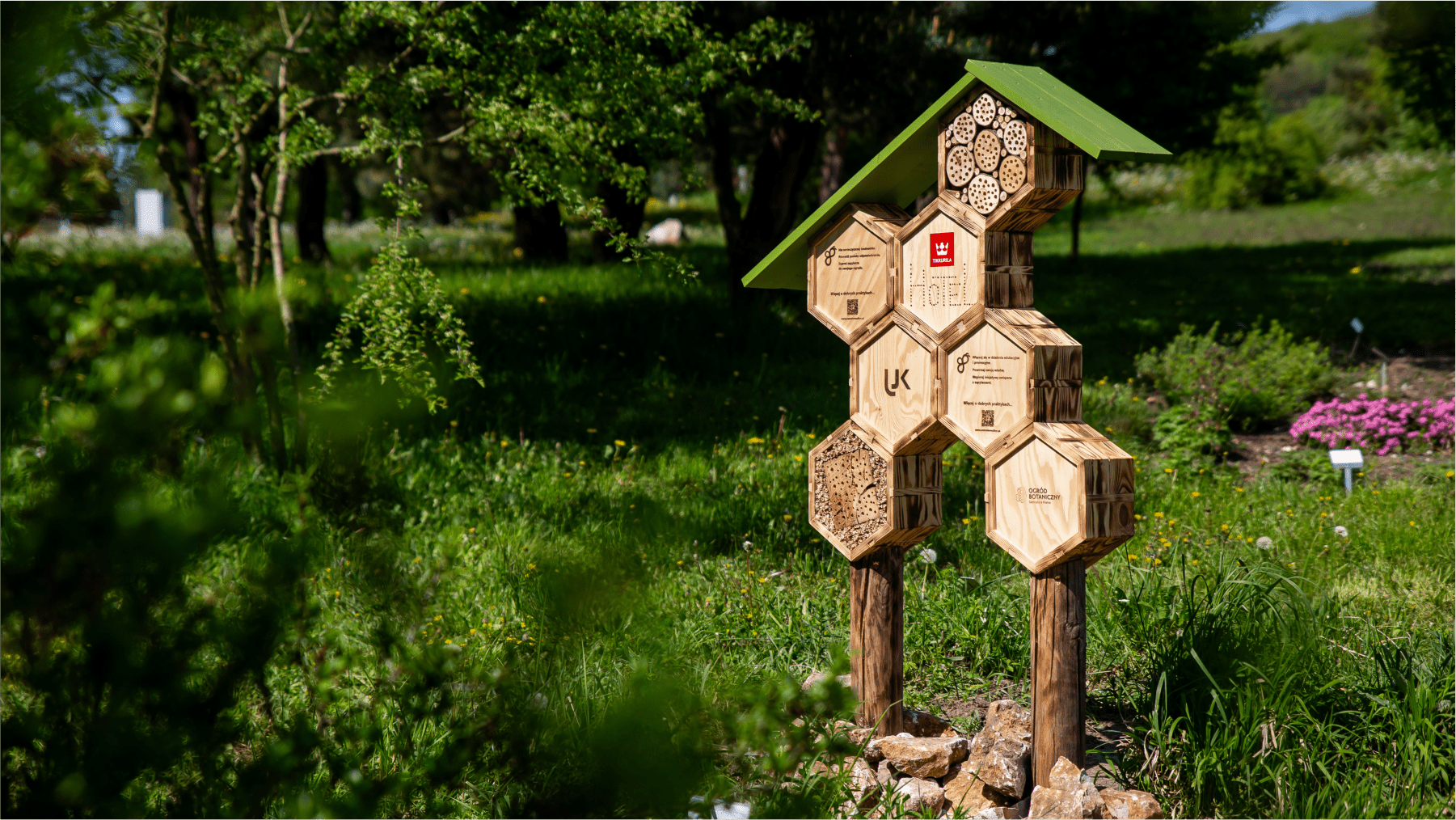
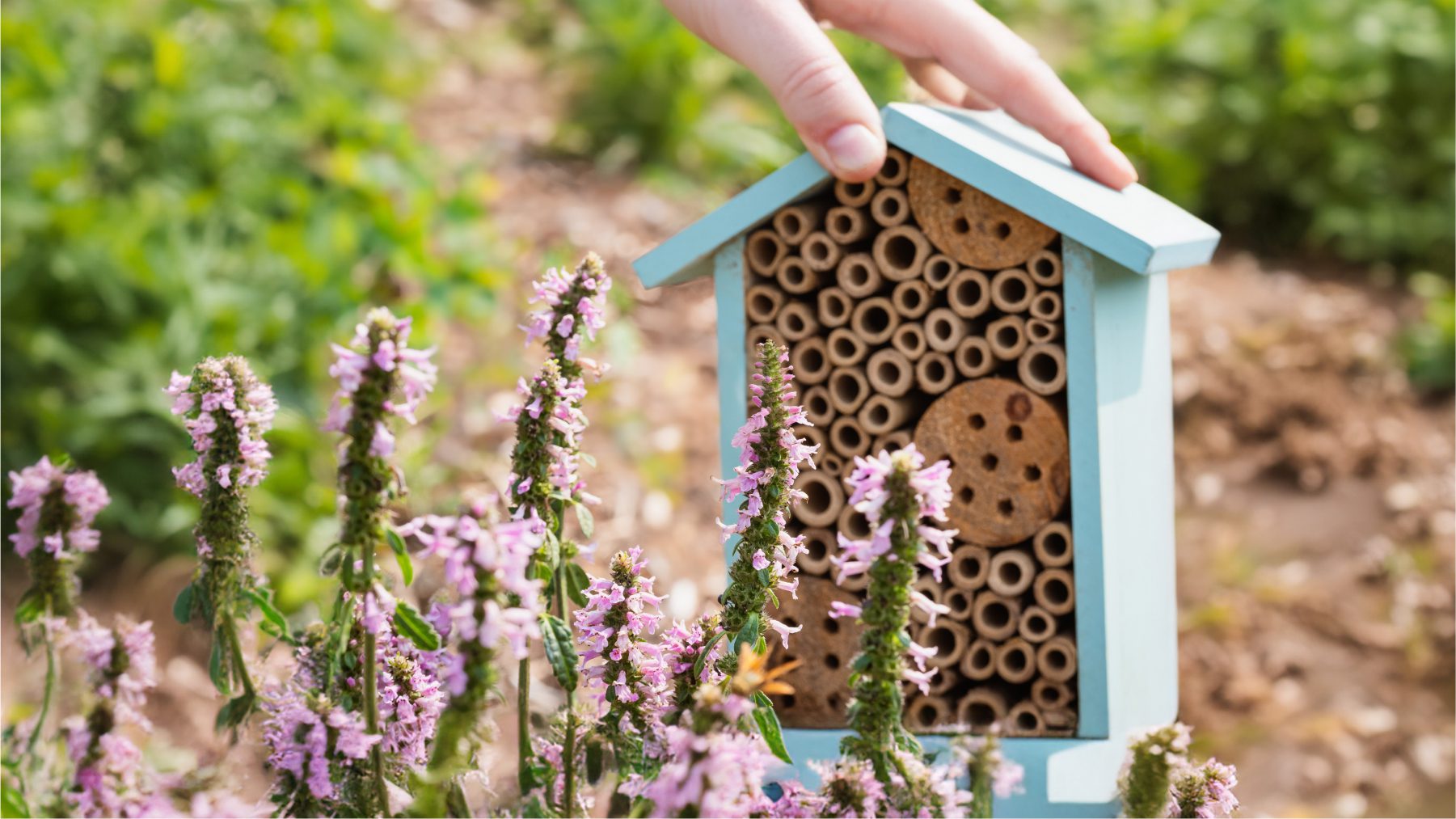
Yes, it’s one of the simplest and most effective ways to help wild pollinators. Insect hotels provide shelter and breeding spaces, but they should be placed where pollinators also have access to food sources.
What actions does your foundation take to protect pollinators?
Most of our work involves educational campaigns aimed at raising public awareness about the importance of pollinators, especially wild species. We also engage in hands-on activities – organizing and initiating projects such as creating wildflower meadows and other green spaces, restoring habitats, and building pollinator hotels.
How can I support your foundation’s work?
Individuals are encouraged to make donations to support our mission, while companies are invited to collaborate more broadly, using educational initiatives and other projects to make an impact. Everyone can also help by spreading awareness about the vital role pollinators play for the environment and for people.
Do you need volunteers?
We are always happy to connect with people who have experience in educational work, hands-on gardening, or a passion for nature. While we do not operate across all of Poland yet, and some activities are location-specific, there may be opportunities to do something meaningful together.
What is your foundation’s mission?
Our mission is to protect the natural environment, with a special focus on supporting wild pollinators. We aim to raise ecological awareness, promote sustainable development, and actively protect nature through education, collaboration with businesses, and engagement with local communities.
How can I reach you?
You can reach us via the contact forms on this site. Our email and phone number are also listed here. We can arrange online meetings, and whenever possible, in-person visits – as we regularly travel across almost the entire country.
How does the foundation fund its activities?
As a foundation, we rely on the support of private individuals, companies, and grants from various institutions and organizations. In accordance with regulations, all our income and expenditures are reported to the relevant ministry. We maintain transparent and accountable operations.
Does the foundation collaborate with other organizations?
Yes, we work with both organizations and educational institutions. Some partnerships are ongoing, while others are project-specific. We are also open to new proposals related to environmental protection, not necessarily limited to pollinators.
What benefits will our company gain from partnering with the Foundation?
First and foremost, the environment is meant to benefit. However, combining the Foundation’s knowledge and experience with your company’s financial resources creates a wide range of additional advantages.
In dedicated projects, we begin by understanding your company’s mission, stakeholder expectations, business profile, and location. This allows us to design initiatives that are not only impactful from an environmental perspective, but also engaging and beneficial for your brand image
What types of environmental campaigns do you organize?
We focus on educational initiatives, the development of articles and e-books, and projects supporting wild pollinators. These include planting trees and shrubs, creating tree-lined avenues, flower strips and wildflower meadows, establishing garden beds, and carrying out various types of green space development.
This is our core activity, which can be flexibly expanded depending on your company’s needs and objectives.
How long does it take to prepare and implement an environmental campaign?
From planning to implementation, the process usually takes several months, but in some cases it may extend to a year or more. Certain activities can only be carried out at specific times of the year. Additionally, some projects require lengthy preparatory stages – such as securing a suitable location, obtaining legal approvals from local authorities, and completing other formal arrangements.
What are the possibilities for long-term cooperation and what benefits does it bring?
This is an excellent question, as long-term cooperation generates the greatest environmental benefits – especially in the case of planting projects. Over time, plants grow and develop. They require proper care and maintenance, but as they mature, the impact of the project becomes even more visible and valuable for the environment.
Long-term partnerships also allow for consistent communication, measurable impact, and the gradual strengthening of your company’s sustainability strategy.
Can you tailor a campaign to our company’s specific needs?
Yes – that is precisely the idea behind our dedicated projects. They are tailor-made to align with your company’s goals and objectives.
We take responsibility for developing the concept, designing the activities, and implementing the project. We can also act as a substantive partner or deliver selected elements of a broader campaign.
What are eco-focused employee engagement initiatives?
These are initiatives that actively involve employees in environmental protection efforts. The concept is broad and flexible, allowing us to adapt activities to your company’s profile and local context.
Tree planting, restoring green spaces, cleaning up parks or rivers, building insect hotels together, positive sustainability challenges, and friendly competitions are just some of the projects we can implement together for the benefit of the environment.
What are the benefits of eco-focused employee engagement initiatives?
First and foremost, they can lead to tangible environmental improvements and real positive change in the local surroundings.
Secondly, when employees voluntarily come together outside of their regular duties to do something meaningful, it boosts motivation and engagement, strengthens relationships, and allows colleagues to connect on a more personal level beyond their professional roles.
Such initiatives also enhance employees’ perception of their employer and reinforce the company’s image as a socially responsible organization.
How long can an employee engagement initiative last?
That depends on its nature and the goals we aim to achieve. It can be a one-time activity lasting just a few hours, a week- or month-long initiative, or a recurring program.
Can employee initiatives take place at our company’s headquarters?
Of course. Some activities can certainly be organized within your office building or on company-owned green spaces. Others may require going off-site.
When planning initiatives, we ensure they are engaging, educational, and relationship-building. We do not propose long hours of travel just to symbolically plant a tree and return home – the experience should be meaningful and genuinely impactful
Do you provide media and marketing support for the initiatives?
We do not directly manage marketing activities. However, these services may be provided – both for us and for our partner companies (if willing) – by a specialized agency that works with us.
Where can an apiary be established?
Our first recommendation is the beautiful and unspoiled region of Warmia and Mazury. It is a green enclave with access to abundant nectar-rich plants, and the hives are located in particularly picturesque surroundings.
Do I need to establish a corporate apiary to start cooperating with the Foundation?
No, it is not required. An apiary is simply an additional element and a symbolic aspect of our cooperation. We can focus our activities on other areas if the donor does not see the need to establish an apiary.
What size will the apiary be? Can it be expanded?
We typically recommend installing 3, 5, or 8 hives, although a larger number is also possible depending on prior arrangements. If the donor wishes to expand the apiary in subsequent years, this can certainly be accommodated.
Who will take care of the apiary?
No need to worry – this is the responsibility of the Foundation and the beekeepers we work with.
Will the apiary located on the company premises produce honey?
If there are sufficient sources of pollen and nectar-bearing plants in the surrounding area, the bees will be able to produce honey. However, it is important to remember that bees are living creatures requiring proper care, and during the season the hives should be inspected weekly by experienced beekeepers.
Do you establish apiaries in cities?
We do not recommend this practice. Research suggests that urban areas often provide an insufficient forage base, and honey bees may create significant competition for wild pollinators.
A much better alternative would be to create a small green oasis on company premises – for example, wildflower meadows, flower beds, or even pollinator-friendly planters.
When can an apiary be established?
For the safety and well-being of bee colonies, we aim to establish new beehives by the end of June.
Can we paint the hives ourselves as part of an employee engagement event?
Yes. After agreeing in advance on the painting technique and the type of paints used, we can either send the hives to your company’s premises or invite you to paint them at our location.
Will we receive video updates throughout the year?
Yes. During the wintering period, hive activity slows down significantly, but we will continue sharing materials recorded during the active season. Don’t worry – we won’t sleep through the winter along with the bees.
Can we visit our corporate apiary?
Of course. We would be delighted to organize a visit to the apiary 🙂 However, we kindly ask you to make sure that none of the participants are allergic to bee venom
Can we organize an educational meeting at our company headquarters?
It would be our pleasure to meet with your team. Storytelling, discussion, and education go hand in hand and help reinforce the value and purpose of our joint efforts.
Will our company’s participation in the program be communicated publicly?
The Foundation’s mission is to support pollinating insects, especially wild pollinators. The idea of protecting pollinators is both noble and necessary, and it is worth communicating.
Companies often promote their involvement internally and externally. While the Foundation does not have its own marketing department and does not independently produce promotional materials, we collaborate with a trusted agency specializing in communication and marketing.
What does “adopting a bee colony” mean?
Thanks to your donation, we ensure the well-being of an entire bee colony – tens of thousands of insects cared for by professional beekeepers in a properly supervised and managed hive.
Can I see “my” bees?
Absolutely! We have nothing to hide. Throughout the beekeeping season, we share photo and video updates showing life inside your hive.
Publishing these materials on social media helps demonstrate your company’s Corporate Social Responsibility and increases the reach of our shared message.
Can I taste the honey from my hive?
Not only taste it. After the honey harvest, we send donors the honey produced by their bees.
For individuals, it is a delicious treat. For companies, it can serve as a sweet gift for employees and business partners.
The role of our foundation – like many similar organizations in Poland and worldwide – is to improve the state of the natural environment. In today’s world, facing climate change, pollution, and biodiversity loss, such efforts are essential.
From Education to Awareness
Education is a top priority in our work. It is the key to raising public awareness. We organize information campaigns, workshops, and lectures. Our blog also serves an educational purpose, with articles often prepared by experts with years of academic and practical experience.
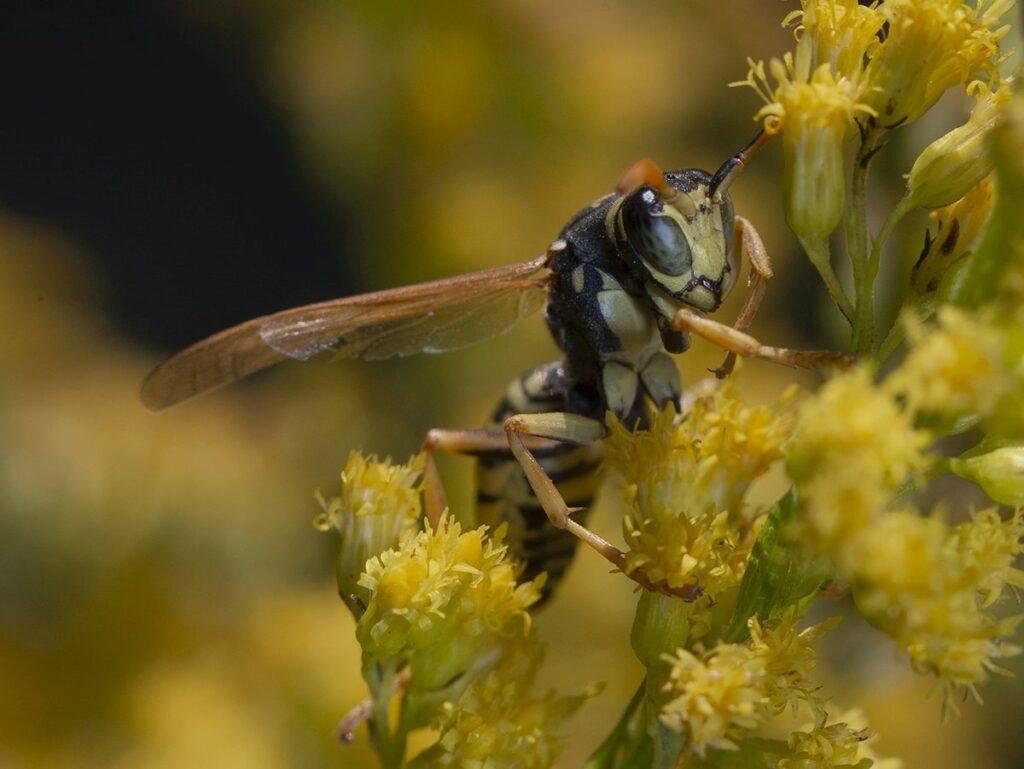
Polistes nimpha Jacek Wieczorek, The Bee Must Be Foundation
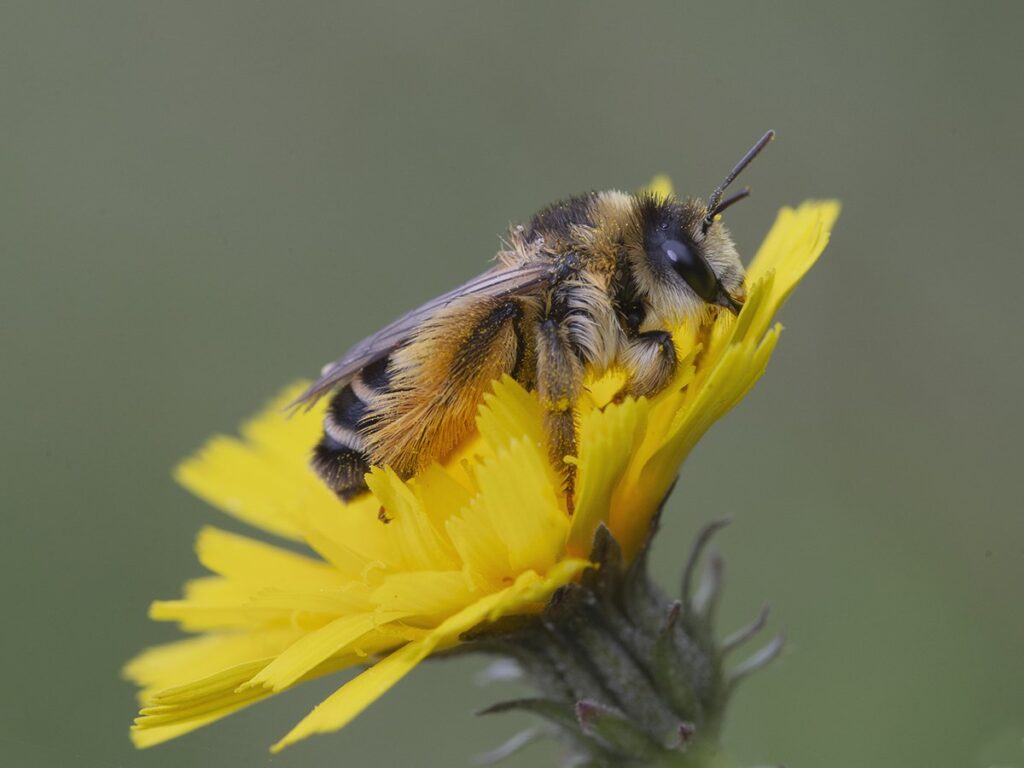
Dasypoda hirtipes Jacek Wieczorek, The Bee Must Be Foundation
Protecting Solitary Bees and Wild Pollinators
The bee has become a symbol of our foundation, and one area of collaboration may include corporate beekeeping. Both elements attract attention – after all, who doesn’t like honey, and everyone knows bees, right? But do we really? While the honeybee is just one species, there are around 470 wild bee species in Poland alone. We care for honeybees in apiaries, but wild pollinators – crucial for biodiversity – need our help even more. We emphasize this repeatedly, aware of “helpful” trends focused on urban apiaries, and even corporate beewashing, which can sometimes be harmful to wild pollinators.
Join our
community
Be ECO every day and encourage others to do the same. Follow our profiles, like, and share. The most important thing is that there are as many of us as possible.
Want to stay up to date?
Subscribe to our newsletter
Inspiring articles, fascinating nature facts, environmental education, and updates on our initiatives. All this and much more, with absolutely zero spam or pushiness. Join us!