
Strona główna » Why Are Bees Important?
Why Are Bees
Important?
The question should be slightly reworded to: “Why are pollinators so important?”
Awareness is key.
Bees are only one type of pollinating insect, and we must not forget about the others.
At the Foundation, we believe that if we want to help and protect them, we must look at pollinators more broadly and not limit ourselves solely to bees, especially honey bees. However, bees are obviously of exceptional importance to the ecosystem.
In this article, you will learn:

What do bees do for us?
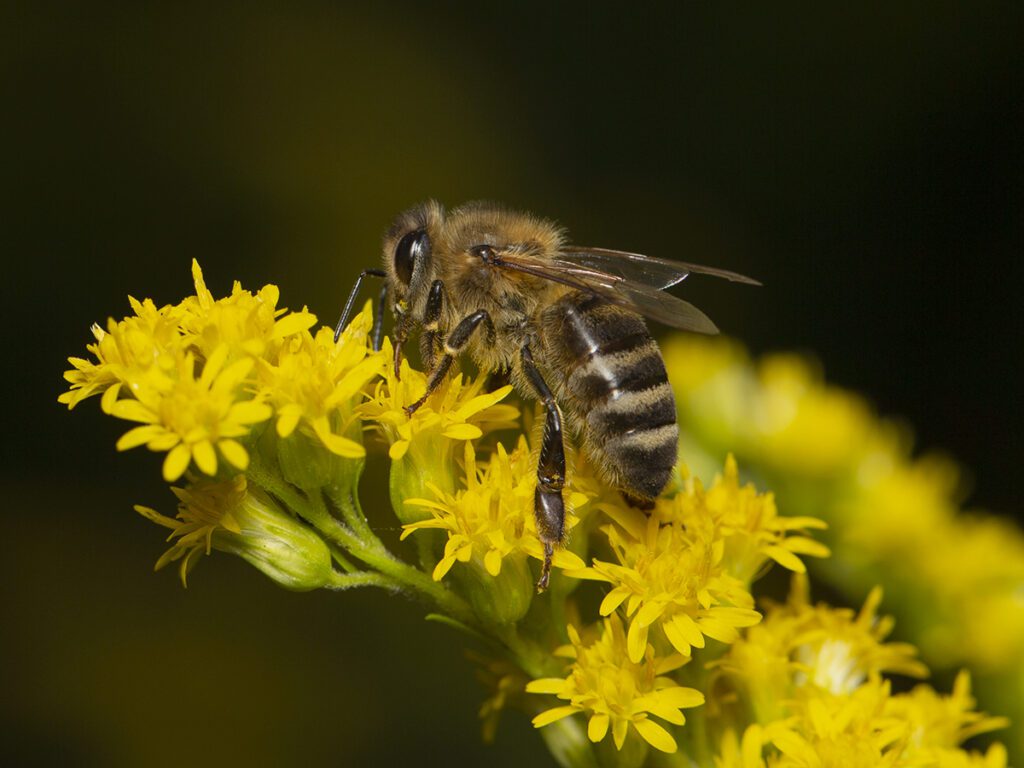
It is often said that we owe every third spoonful of food on our tables to bees. Incredible, right? And it’s hardly an exaggeration. Around 80% of cultivated plant species require pollination in order to bear fruit. The main role in this process is played by the one we all know so well – the honey bee.
It is estimated that in Poland, the honey bee pollinates:
- around 50 species of cultivated crops,
- more than 50 vegetable species,
- more than 50 species of medicinal plants and herbs,
- around 150 species of horticultural plants,
- around 15 species of fruit trees and shrubs.

These include plants that end up on our tables, as well as those used, for example, as feed for livestock. It is also worth noting that bees pollinate very efficiently and across large areas. They exhibit what is known as floral fidelity – once they discover a valuable food source, whether it is an apple orchard, a blooming linden tree, or a field of rapeseed, they remain loyal to it and make full use of it.
Incidentally, this is why it is possible to produce monofloral honeys – varieties derived predominantly from the nectar of a single plant species.
Without pollination, many plants would not be able to bear fruit at all, or would do so much less effectively. Even so-called self-pollinating plants, which theoretically do not require pollinators, produce better yields when cross-pollination occurs – a process carried out by bees and other pollinating insects.
It is difficult to fully grasp what the consequences would be for each of us if the bees were to suddenly disappear. Can you imagine our menus suddenly lacking almost all fruits and vegetables? It would be a food and economic catastrophe affecting people all around the world.

Jacek Wieczorek, The Bee Must Be Foundation
Jacek Wieczorek, The Bee Must Be Foundation
Jacek Wieczorek, The Bee Must Be Foundation
Jacek Wieczorek, The Bee Must Be Foundation
Let’s help!
We included the bee in its name for two reasons.
- Firstly – bees are really important, and we are afraid to even think about what our world would be like without them.
- Secondly – bees are well known. They are pleasant, friendly, and valuable. Thanks to them, we can draw the attention of a wider audience to efforts to support all pollinating insects, as they are all important.

Not only honey bees are important
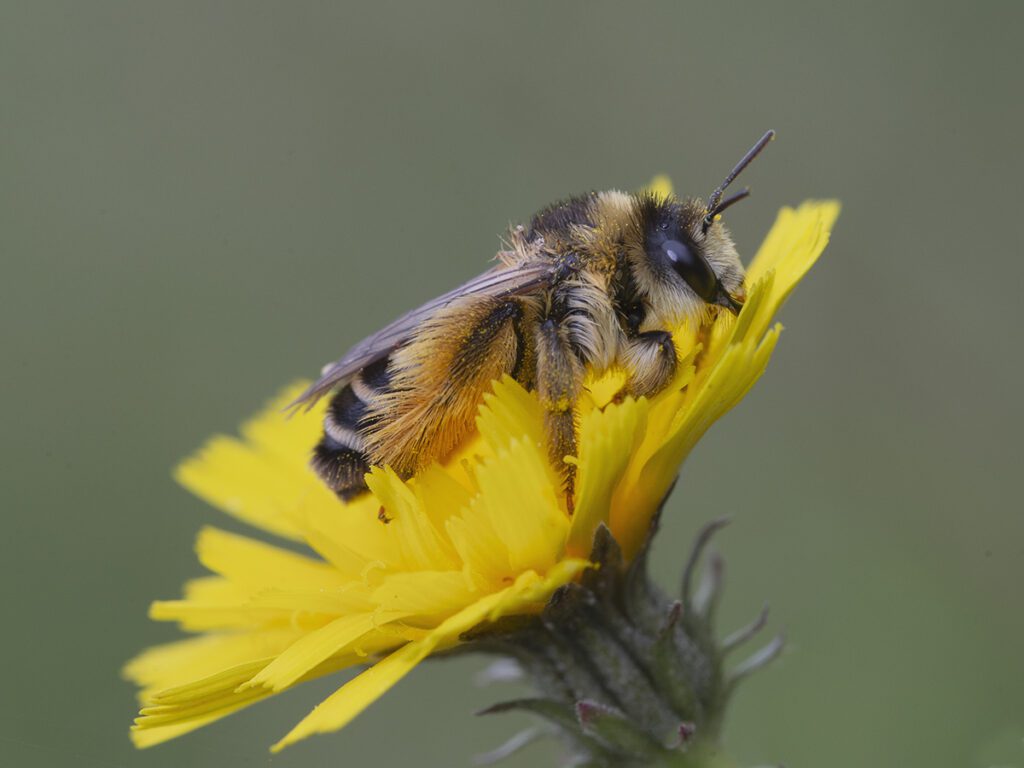
For most of us, when we think of bees and pollinating insects, we automatically picture the honey bee. But did you know that in Poland alone there are around 470 species of bees?
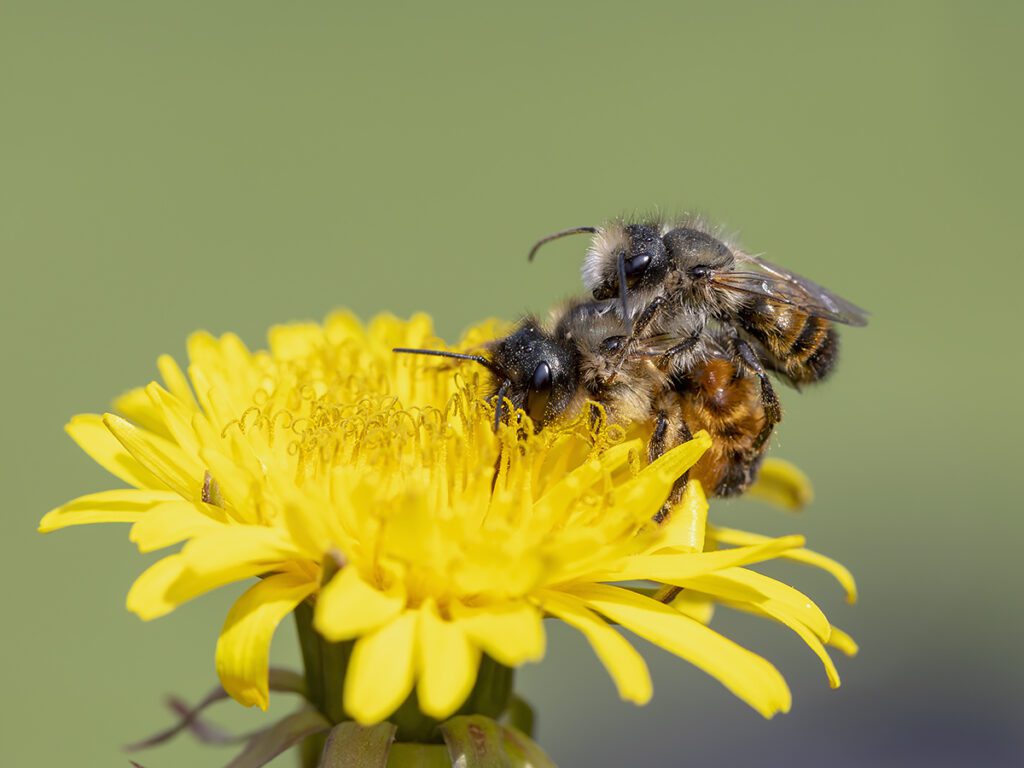
These are wild bees – most of them, so-called solitary bees – which do not live in hives or colonies, but in individual nests, often located close to one another.
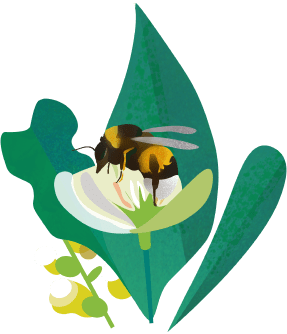
Of these 470 species, nearly half are threatened with extinction – due to human activity. We live in an increasingly managed and orderly world, where natural habitats for insects, including pollinators, are disappearing. Cities continue to expand, agriculture has become dominated by monocultures, and vast areas of land are used for crops where pesticides are commonly applied to maintain yield quality – herbicides that eliminate so-called “weeds” and insecticides that kill insects. On top of this, climate change and environmental pollution make survival ever more difficult for all living beings, from humans to insects.
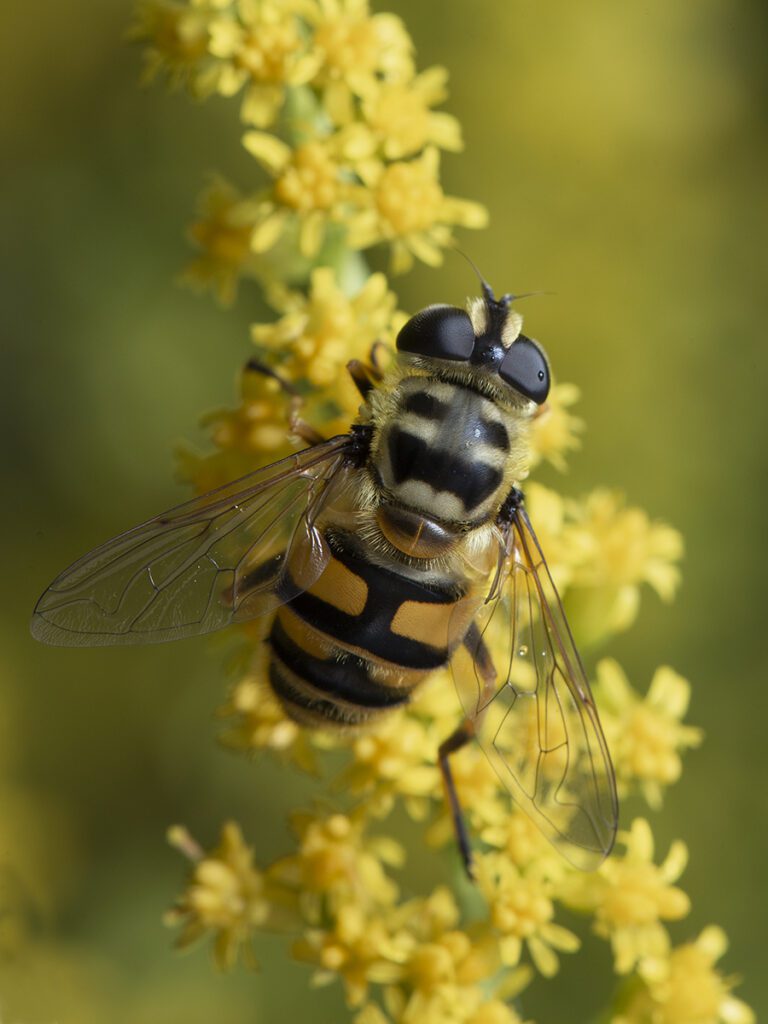
The importance of wild pollinators – solitary bees, butterflies, beetles, and hoverflies – must not be overlooked. Their pollination efficiency can even surpass that of honey bees. Some species of solitary bees are capable of transferring up to ten times more pollen between plants. For certain crops, other species actually outperform honey bees. For example, in apple orchards, a single mason bee can do the work of several hundred honey bees (source).
In greenhouse cultivation, honey bees are also relatively ineffective, whereas bumblebees perform exceptionally well. There are flowers whose nectar is either unattractive or inaccessible to honey bees due to their structure, yet they are successfully pollinated by other insect species. Butterflies, for instance, can reach deep into flower heads with their long proboscises.
Although honey bees are primarily responsible for pollinating agricultural crops, their role in wild plant communities is far less significant. Studies indicate that in natural and semi-natural ecosystems, only 5% of plant species are visited exclusively by honey bees, while one-third are not visited by them at all. This is where wild pollinators play their greatest role – they are largely responsible for maintaining biodiversity in these habitats.

It is also worth knowing that wild pollinators are not as dependent on weather conditions as honey bees. They can fly at lower temperatures, on windy days, and even in light rain or fog. Unlike honey bees, other pollinators tend to “work” locally, staying close to their habitats. That is why our Foundation so often emphasizes the importance of maintaining diverse plantings – for example, through wildflower meadows, nectar-rich flower beds, and ecological corridors.
Insects, including wild pollinators, also play an essential role in keeping ecosystems clean. Wasps, hornets, ants, and beetles (yes, they are pollinators too) feed on decaying plant matter and the remains of other animals.
By removing this organic waste, they help clean the environment. They also prey on pests – although, we admit, they may sometimes target bees or cultivated plants as well. This, however, is no reason to eradicate or kill them, as each species has its own place in the ecosystem.
After all, the role of insects in the environment goes far beyond pollination. Not everyone realizes that insects make up around 75% of all known animal species. They are therefore an invaluable food source for other insects and invertebrates, as well as for birds, amphibians, and reptiles. A decline in insect populations inevitably leads to declines in the animals that feed on them. It is a chain reaction in which the loss of one species triggers the loss of others.
Facts About Bees and Other Pollinators
- Honey, if stored properly, never spoils.
- Around 20,000 bee species have been identified worldwide.
- The largest bees in the world can reach nearly 4 cm in length, while the smallest measure just 2 millimetres
- Some pollinators build their nests exclusively inside snail shells (e.g. the snail-shell mason bee).
- The honey bee is the most important pollinator in agricultural production.
- A queen honey bee weighs between 200 and 280 milligrams and can grow up to 25 millimetres long.
- A honey bee’s tongue (proboscis) measures 6–7 millimetres.
- Honey bees can carry pollen and nectar weighing up to one-third of their body weight.

But that is not all bees do for us.
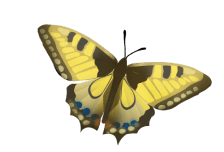
Pollination enables plants to produce fruits and seeds. Thanks to this process, they can reproduce and reappear in nature the following year. Without bees and wild pollinators, many plants would stop producing seeds, depriving us not only of crops, but also of the beauty of flowers that cover meadows and garden beds.
We should also remember the products we obtain directly from bees: honey, beeswax, propolis, bee bread, pollen, royal jelly, and bee venom – all natural gifts we owe to honey bees.
These products are used not only in the kitchen, but also in cosmetics and medicine. Did you know that one of the components of bee venom (melittin) has demonstrated anticancer properties and is currently being studied for potential therapeutic applications? Other bee products are known to support the immune system and have antibacterial, bacteriostatic, and antiviral properties. They have been valued in traditional medicine for centuries and are still used today in medicinal preparations available in pharmacies.
Chcesz działać z nami?
Masz jakieś pytania?
Zadzwoń i dowiedz się wszystkiego, czego potrzebujesz.